
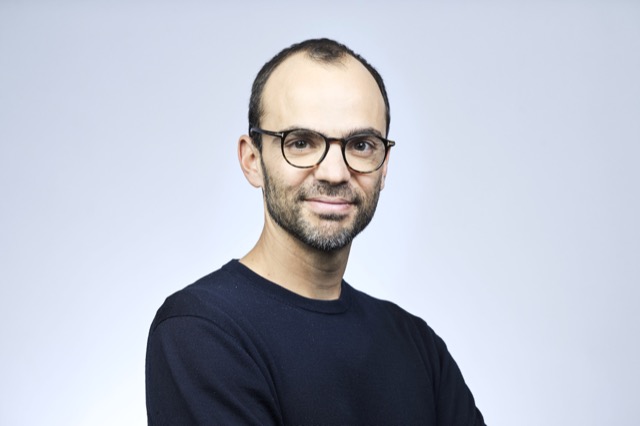
Looking back, becoming a business angel was such a low probability outcome, it should have never happened to me.
In 2014, I was the finance director for Amazon in France, after studying humanities at Ecole Normale Supérieure and the London School of Economics, and spending 7 years at The Boston Consulting Group running strategy projects for large clients. I had the idea of a business to help local businesses increase their online visibility. I shared the idea with Quentin, a former intern in my team, whom I highly regarded as a self-made software engineer. Quentin told me he had met a young guy out of business school who had actually launched the exact same company I wanted to build. I met Thibault, was impressed by his drive, but felt his project wasn't set up for success. After a few weeks, we decided to restart from scratch. He liquidated his previous company and created Partoo with €80k as a first check from me, v1 of the tech built by Quentin, and the help of a fantastic team. I stayed at Amazon. Partoo grew fast. In 2019 I sold my shares to Webedia, a company aggregating media and software businesses. A few years later, Thibault was leading the company with hundreds of employees and presence on 3 continents. Quentin moved to Datadog as one of the first employees.
I should have never shared my idea with Quentin. I should have never agreed to meet my own future competitor before even starting my business. But I've always shared ideas freely, acted on weak signals, and trusted people faster than conventional wisdom would recommend. I didn't know it then, but that instinct would quietly shape everything that followed.
My guts wanted more of what Partoo had given me. My brain didn't know where to begin.
What I did know was that I wanted to reconnect with my former university, L'École Normale Supérieure — the place with more Nobel Prizes and Fields Medals per student than anywhere else in the world, and at the same time the place furthest from the business world. I had studied humanities there, but since then I had been fortunate to collect an unusual range of data points: large companies (7 years at BCG), big US tech (Amazon), hypergrowth startups (Partoo, ManoMano), and zero-to-one startups through half-dozen small angel checks. Talking to scientists and researchers at ENS, I realized they had something extraordinary, but also a massive blind spot. They had never recruited non academic A-players, built a team from scratch, thought about company culture and rituals, fired low-performing or toxic employees, written a pitch deck, raised a round, or managed a board. I had done all of that. Maybe that was useful.
End of 2016, I attend a pitch event at ENS. A PhD student presents a technology to predict how two molecules bind together in the human body. I get the value, I'm impressed. After the event, I walk up to his supervisor, Maximilien Levesque, who was the real mastermind behind the tech. Max believes this technology could be game-changing in pharma R&D — computational drug discovery before it had a cool name. We have an immediate connection and spend the next two years talking regularly.
End of 2018, he's ready to launch. He needs a co-founder and asks for help. I knew absolutely nothing about and nobody in biotech. I started building a network from scratch. We met a lot of talented and sometimes very weird candidates. Then, one Sunday morning, while stand-up paddling on the Marne river with my friend Julien from BCG, I asked him if he knew someone with enormous energy, deep pharma knowledge, and the hunger to become an entrepreneur. He introduced me to Emmanuelle. The fit was immediately obvious. They create Aqemia mid 2019, I invest the first check.
I should have never met Max. I should have never met Emmanuelle. I should have never invested in a field I knew absolutely nothing about. But I was attracted by the "road not taken", the less obvious one, the less crowded one. And I've learned since that showing up on those paths, curious and genuinely useful, tends to unlock things you couldn't have planned.
By the time Aqemia launched, I had moved from Amazon to ManoMano, one of Europe's fastest-growing e-commerce platforms. I wanted to be fully immersed in startups, not just as a side hobby over weekends. At ManoMano, I built the finance, legal, payments, and analytics teams from scratch, and helped raise around €400m from major global funds — General Atlantic, Eurazeo, Temasek, Dragoneer. I ran dozens of VC calls, wrote dozens of memos and Q&As, managed confirmatory due diligences with financial and legal firms.
What the whole journey gave me is something harder to name than a title or a thesis. It's not expertise in biotech, or AI, or semiconductors. It's having been in the room, in very different rooms, at very different moments: operator, fundraiser, consultant, advisor, investor in startups, LP investor in funds. BCG taught me how large organizations think and work. Amazon showed me what unreasonable ambition and razor-sharp execution looks like. ManoMano put me in the hypergrowth fire with full responsibility. And the founders I backed taught me that the most important moments in a company's life are almost never the ones that show up in the deck.
I should have never ended up doing all of this in the same lifetime. But here I am — and I think it makes me a different kind of investor. Not the one who knows your market better than you do. The one who has probably lived a version of the problem you're facing right now.